No Flaw, No Fun
Why Character Flaws Are Your Best Storytelling Tool
I’ve spent plenty of time on both sides of the GM screen. I’m a writer and storyteller by nature—I grew up spending my summers inside on my computer, writing countless stories, and then I went to school for creative writing. I’ve been published a few times, mostly nonfiction things, but I always keep coming back to fiction in the end. Knowing this about me, that I’m an author and a wordsmith, you might think I prefer the GM side of the screen.
That’s not the case.
As a GM, you have the power to make anything happen, to frame the story, but I’ve found I often prefer being a player. I’m someone who plays TTRPGs for the narrative fun far more than the crunchy mechanics, and there’s a special kind of possibility that opens up when you get to focus all your energy on living in the world, not just building it.
At some tables, the GM is the main storyteller. (Really, depends on the dynamics of your table and your preferred style of play, but I’ve seen this first hand.) I like to think of my role as a player a bit differently, though.
As players, we’re the protagonists. Each of our PCs are the main characters of our own stories, collectively and individually. The story is aboutus. And while the GM sets the stage, we’re the ones who have to act on it.
When you’re just sticking to the “Rules as Written” styles of play, it’s easy to feel like a passenger or passive observer: you roll to hit, you cast your spell, you take your long rest, rinse, repeat. It can leave you feeling disconnected from your table or even your own character. Suddenly, the challenge is more about keeping your own interest in the story, and less about the CR of the beasties you’re battling.
Notice the theme here is all about the narrative. I’m talking about and to players who want a different kind of challenge. This isn’t for min-maxers who enjoy building the crunchiest characters they can for maximum output. If that’s you, that’s okay, but this isn’t for you. This is for the players who want to spice things up for the story.
The real magic, the real spice, happens when you decide to make the game your own—not just through roleplay, but by building a character that is mechanically and narratively a challenge for you.
I love a good challenge as a player. Let me show you what I mean.
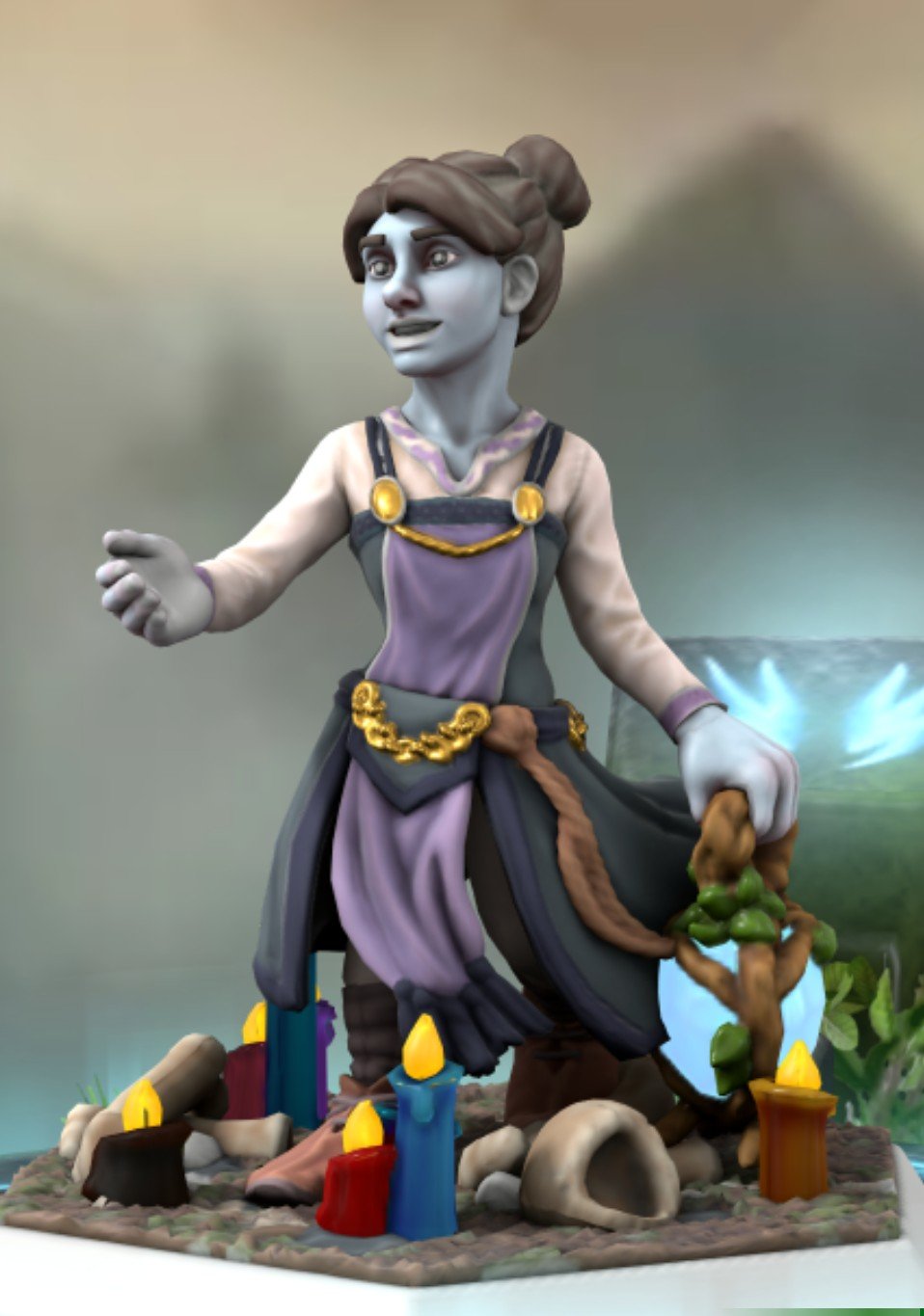
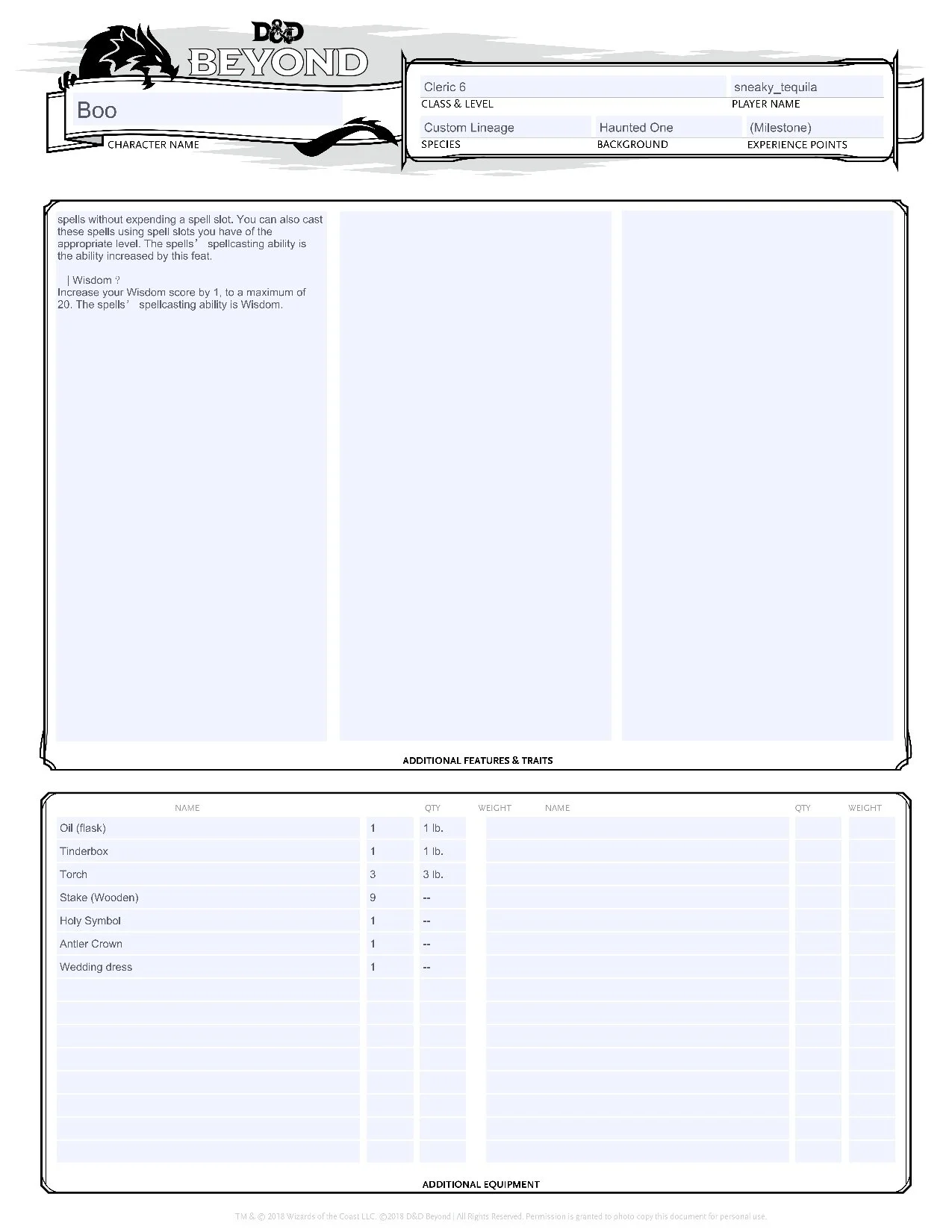
Meet Boo, a young grave cleric with an indomitable spirit. Literally.
Case Study: Meet Boo, My Ghostly Grave Cleric
Cue the Barovian mists. My group is running Curse of Strahd, and I wanted to bring something special to the table. If you know the name, you know the flavor of this module: gothic horror with things that go bump around every corner. I wanted to create a character for this that thematically fit into the world, added to that immersion at the table, but also provided me a chance to explore not just Barovia, but the character herself—personality, mechanics, and all.
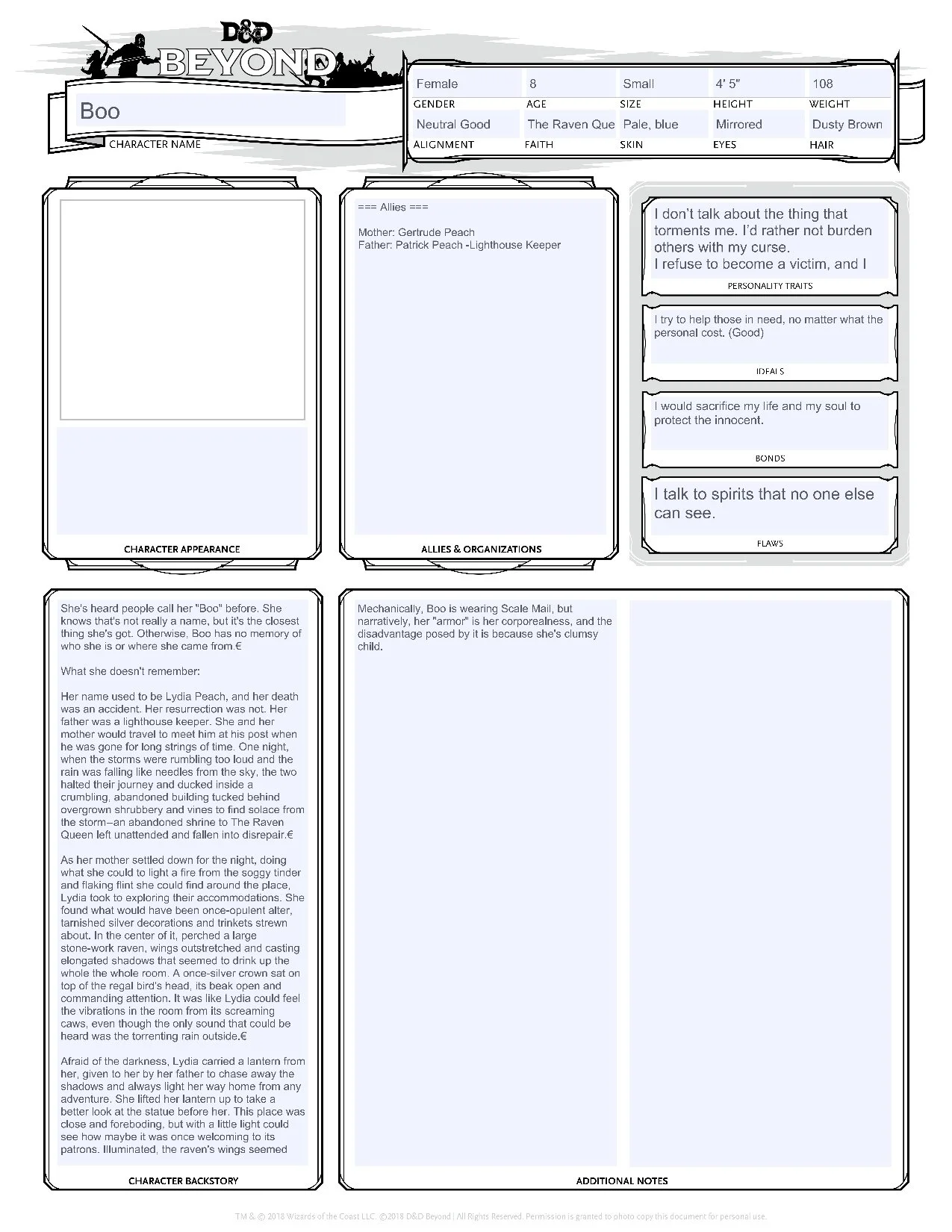
Here’s the twist: Boo is the ghost of a girl long forgotten. She doesn’t know it. (And neither do the other players at our table... yet). In a past life, her name was Lydia Peach. I wrote entire stories to fill in her backstory.
It was interesting to me that her story ended before the module even began, and that offered her a new chance at a different kind of beginning. But she still carries some remnants of that past of hers as hazy as the Barovian mists in her mind. She’s a ghost that’s terrified of the dark, and constantly carries a special lantern her father (a lighthouse keeper) gave her countless years ago. This lantern holds a black flame candle, and she’s never seen it go out. I’ve worked with my GM to decide that something will happen if it does, but even I don’t know what, so it’s best to keep it lit at all costs.
My GM and I collaborated on this for weeks before we hit the table. I didn’t just want a cool backstory; I wanted it to mean something in the game. I worked with my GM to homebrew this feisty little gal into something that keeps me on my toes every single session and really makes me think through my choices—and not just in combat!
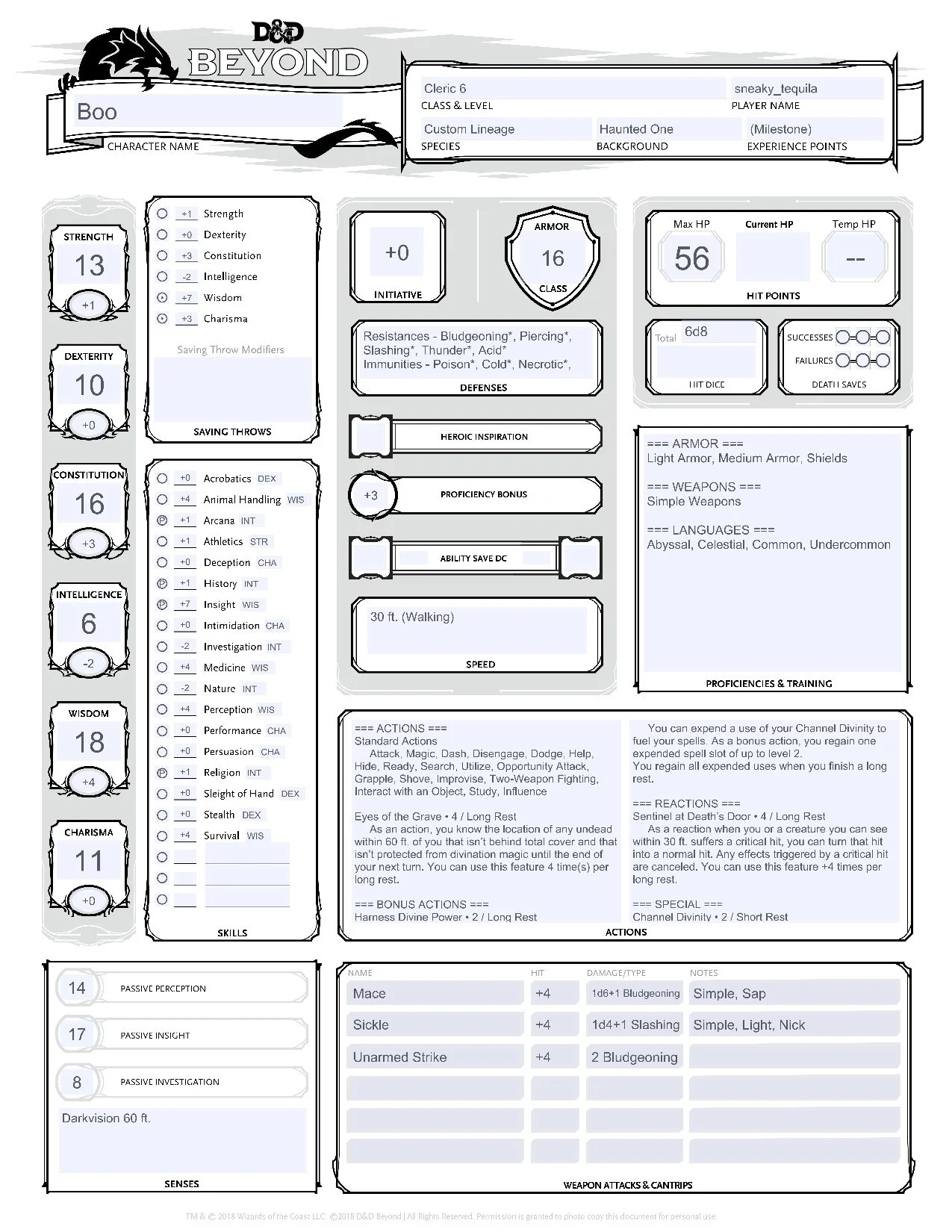
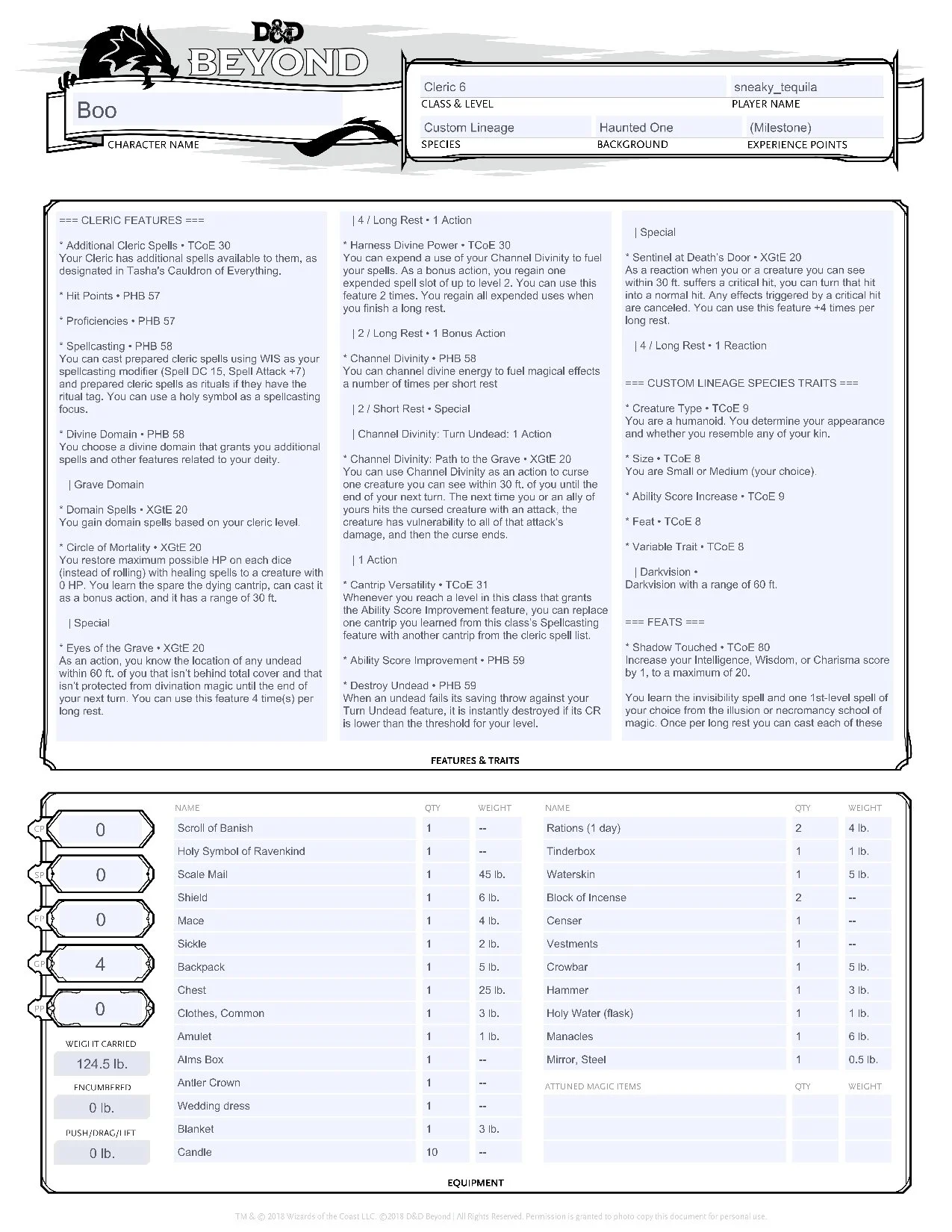
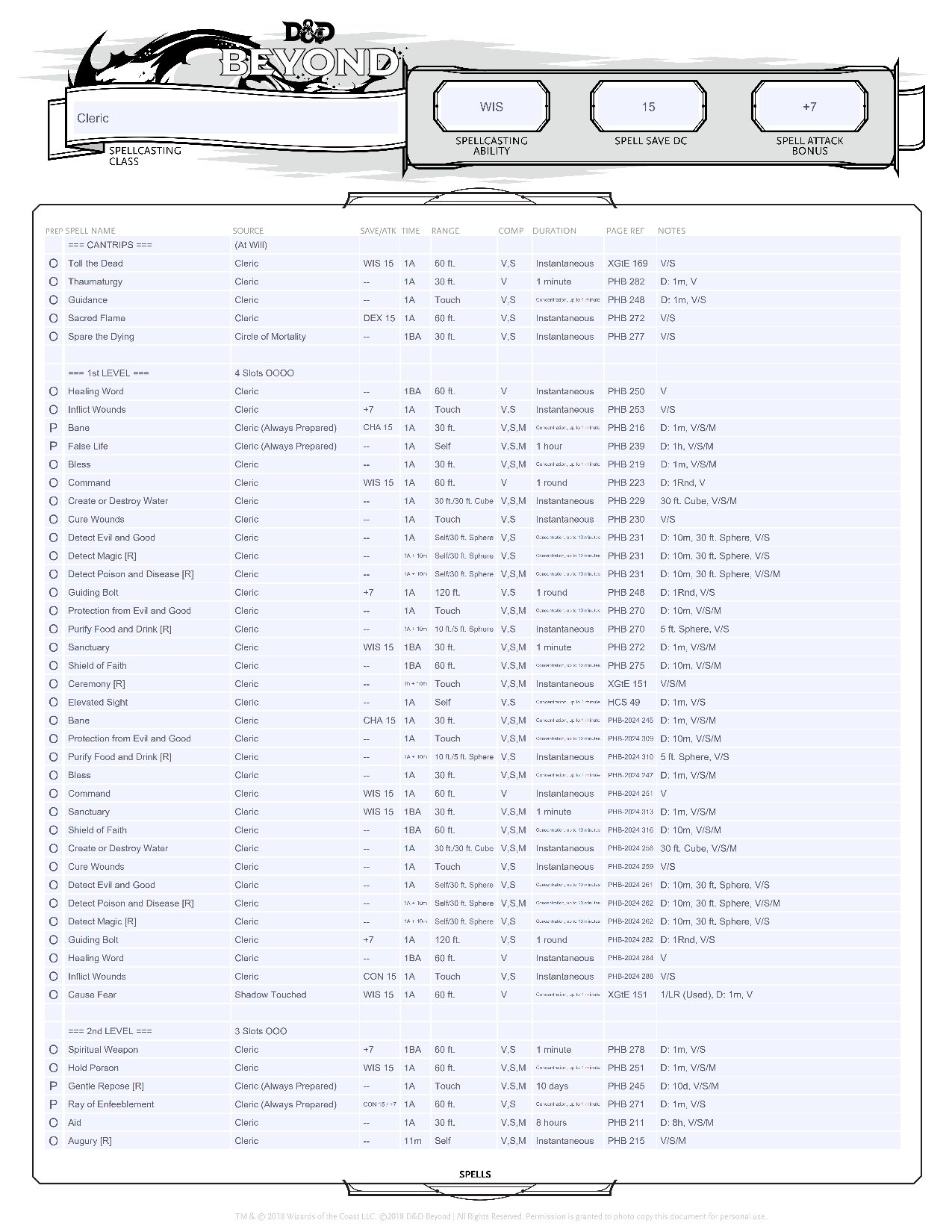
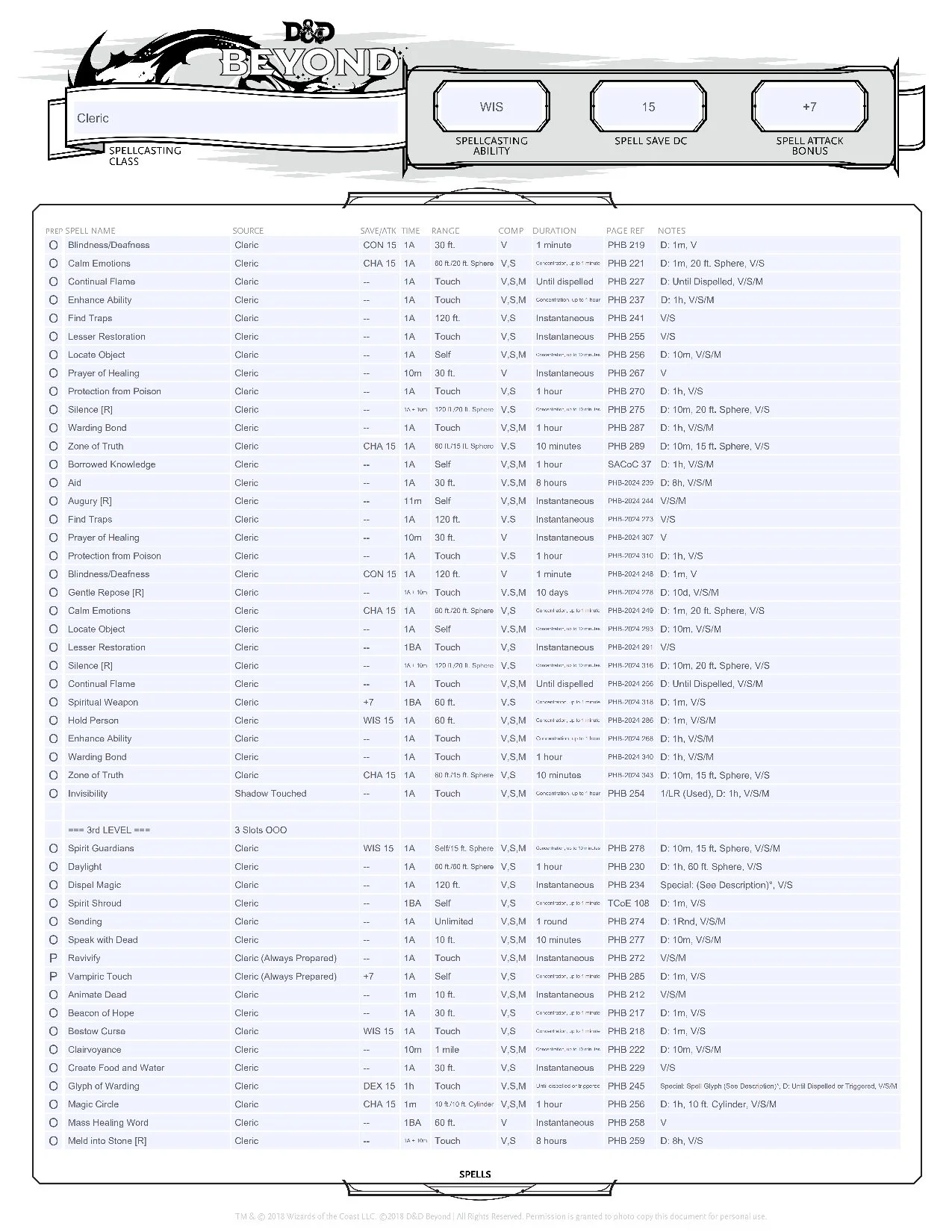
Take a closer look:
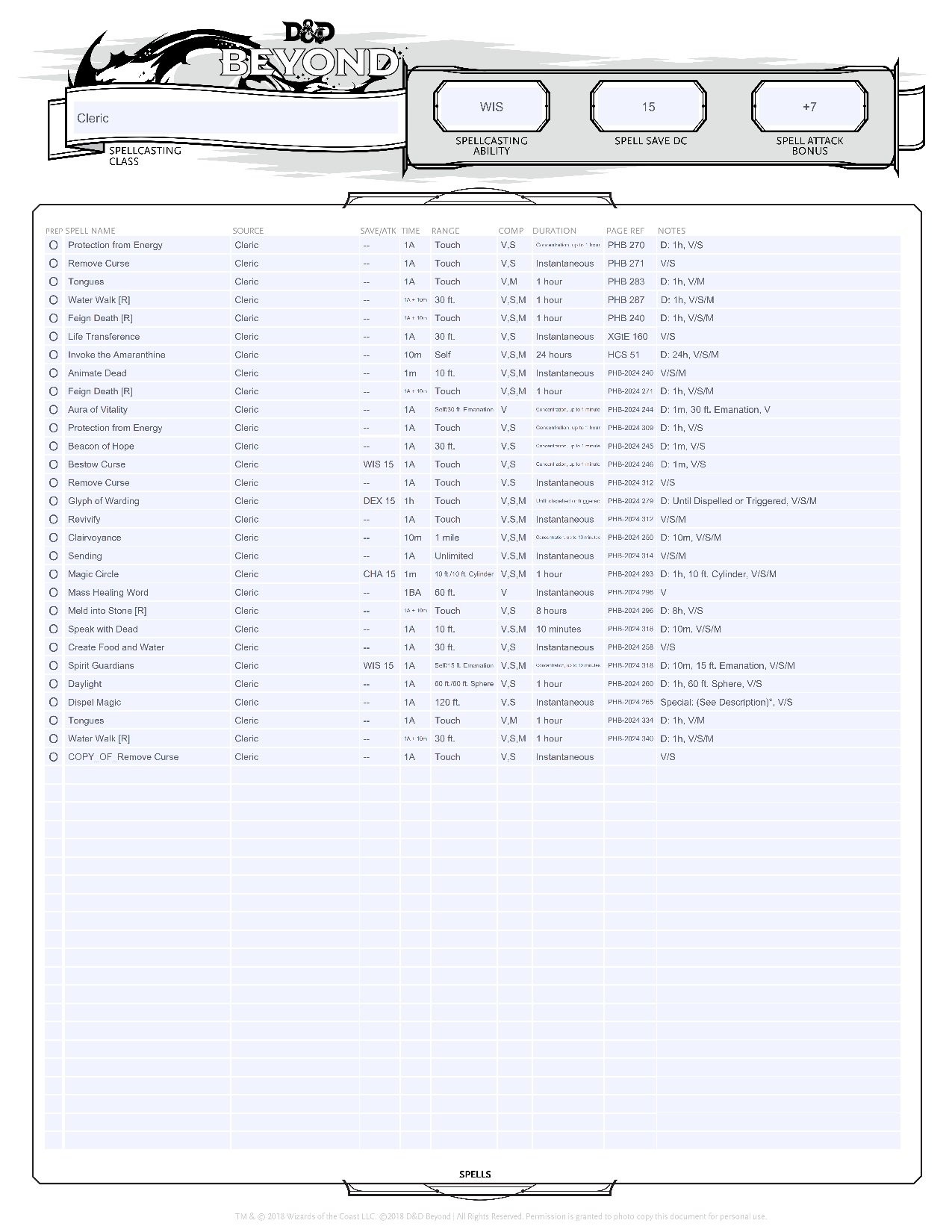
The Beauty of a Double-Edged Sword
On the surface, Boo seems powerful. She has a human stat block, but she also has the resistances and immunities of a ghost. Our party met Strahd early on, and when he tried to attack her, he straight up missed. That was a cool moment at the table, for sure, that left me feeling untouchable.
But here’s the flip side: we also built in vulnerabilities directly tied to her nature and her class.
Boo is a Grave Cleric. She channels divine, radiant energy. But because she is an undead spirit, my GM and I worked out that radiant damage actually hurts her. My most powerful class feature is also my greatest weakness.
(Side note: it always surprises me that this actually isn’t part of the ghost stat block. I went into this thinking that it was and was actually why I wanted to frame Boo in this light to begin with.)
When she uses her Turn Undead feature, she has to make a save against her own ability. If she fails, there’s a custom table of consequences. The same goes for her Destroy Undead feature. Will she bolster her allies, or will she inflict greater consequences on herself? I never know, and have to decide on these things with the utmost of intention.
Being a ghost, healing potions have no effect on Boo. They pass right through her. If she needs to heal herself, she has to find other ways, like using spells (hello, Vampiric Touch) or simply taking a rest. We’ve worked it out that she disappears when she rests, adding an extra layer to the mix.
If Boo drops to zero hit points, she doesn’t roll death saving throws. Instead, she vanishes for a number of hours equal to a 1d8 roll. This part is actually terrifying to me as a player. It gives “player death” to a player who can’t die more stakes. It’s not just, “I’m down, please heal me.” It’s more like, “I’m gone, and the party is on their own.”
Why This Works: Failing Forward
This character is so much more engaging to play because she’s a walking (floating?) bundle of high-stakes decisions.
During gameplay, it’s so easy to default to roll to succeed. That’s how the game is literally designed, after all. As players, we want that Nat 20, that dopamine hit…we want the win. But in a story, constant success is often the most boring outcome.
“You hit. The bad guy dies,” is an end.
“You miss, and your sword gets stuck in the wall as the beast turns on you,” is a scene. It adds to the tension. It makes a success even sweeter, and makes another failure more bitter.
My custom-built flaws for Boo are a failure engine. They are designed to create complications. That failed save on Turn Undead isn’t a punishment; it’s a plot point I’m genuinely excited to see happen. It’s the “failing forward” that makes the story interesting.
And these flaws, paradoxically, become an advantage. Not a power advantage, but a narrative advantage.
Boo’s fear of the dark and her one-of-a-kind lantern? That immediately puts a spotlight on light, darkness, and resources for the entire party.
Her inability to take a potion? It forces the party to protect their healer in new ways and makes every attempt at healing—herself or other—feel earned and desperate. (Plus the reveal when the fighter tried to offer her help the first time, only for it to be completely null, was very fun for me.)
This isn’t just good for me; it’s a gift to the GM. Because we built Boo together, my GM knows all her secrets. They have a whole set of narrative levers they can pull when they want to raise the tension. But these aren’t just story hooks for my character; they’re narrative footholds for the whole party.
Take Boo back to Barovia. Say the party meets a desperate priest of the Morninglord who offers a holy blessing as thanks for their help. For a normal party, that’s a nice little buff. For us, it’s a problem. That blessing is radiant energy, which hurts Boo. We can’t accept it, but we also can’t just refuse this poor guy’s one act of faith without looking suspicious and cruel. My flaw is now the party’s problem. They may have to jump in, lie, or create a diversion to protect me. It turns a simple boon into a tense roleplaying scene where everyone has to think fast.
This also completely changes how I approach combat. I’m not just waiting for my turn in the initiative order to pick the most efficient spell off my list. Instead, I have to stay constantly engaged, paying attention to everyone’s moves and thinking tactically on a deeper level.
I’m always calculating the risks:
Can I get close enough for a Vampiric Touch without getting surrounded?
Is using Turn Undead to save the fighter worth the risk of failing my own save?
If I unleash a powerful radiant spell, will it hurt me so much that the party can’t handle the blowback?
It forces me to think about positioning, resource management, and risk in a way a standard cleric probably wouldn’t.
That’s a level of engagement that keeps me hooked on every moment of the fight, not just my own turn. That’s the engagement that goes way beyond RAW.
How You Can Spice Up Your Own Game
You don’t need to be a ghost to do this. The key is to build in choice, consequence, and flavorful risk.
It’s so easy to fall back on familiar tropes. We’ve all seen them: the street urchin rogue with a heart of gold, the antisocial wizard who only cares about books, the stoic fighter who grunts, the horny bard. These are fine starting points, but they’re not a story. The best way to break out of a trope is to ask “what if” and introduce a real, complicated flaw.
Start with a “What If...?” and Give it Teeth
Don’t just add fluff; add a mechanic.
What if your Barbarian’s rage is an actual curse? Think Jekyll and Hyde. Maybe you have to make a Wisdom save every time you rage to keep from attacking the nearest creature, friend or foe. Suddenly, your greatest strength is also the party’s greatest liability.
What if your Wizard stole their magic from a fey who wants it back? Maybe every time you cast a 3rd-level spell or higher, you risk the fey noticing, causing a wild magic surge, or even having the spell fizzle as they try to reclaim it.
What if your Rogue’s “heart of gold” is a magical code? Maybe you are physically unable to steal from someone you know is in need, or you take psychic damage if you do. Now that “fluff” has teeth.
What if your Paladin’s oath is so strict it’s a burden? Maybe your “Oath of Truth” isn’t just a guideline; it’s a magical compulsion that forces you to answer any question asked of you honestly, no matter what the cost.
Talk to Your GM
This is the most important step. Work on this together. This isn’t about asking for more or less power; it’s about asking for more story. Frame it as, “I have this idea to make my character more challenging to play. What if we added this vulnerability?”
Check Your Table’s Vibe (and Build Trust)
This is a big one. While your GM is your primary collaborator, your character existsat the table. My fellow players don’t know exactly what’s going on with Boo, but they clearly know something is up. They can see her unusual strengths and weaknesses and know she’s not “normal.” They just haven’t figured out the “ghost” part yet, and that mystery is part of the fun! This requires trust. As the party’s healer, it asks my fellow players to put a lot of faith in me to play this weird, vulnerable character correctly and not just be a liability. Make sure your group is on board for this kind of intra-party dynamic. Trust is key.
Find the Balance
This is a collaboration, not a power grab or an exercise in self-sabotage.
An overly strong character with no real consequences is boring and can hog the spotlight, giving you way too much “main character energy” that alienates the table. On the other hand, you don’t want to nerf yourself so badly that it’s a slog just to keep your character alive.
The goal is to create interesting challenges, not an unplayable character. Boo has ghost immunities, but she’s also hurt by her own “healing” magic. It’s a trade-off.
Embrace the Flaw
The best characters aren’t the ones who are perfect at everything. They’re the ones who have to overcome fascinating, personal flaws. Add a mechanical “cost” to your cool concept.
Remember: you aren’t just a passenger in the GM’s story. You’re the co-author. But a co-author who only writes “and then I succeed” is a boring storytelling partner. The best way to drive the narrative forward is to keep yourself interested in the details, and introducing complications may just be the secret sauce to keep you going. Build a character that’s a challenge to write, build a character that can fail forward, and I promise you’ll be telling a story that everyone at the table remembers.