
The Impact of TTRPGs
The Heart and Science of Collaborative Play
Why TTRPGs?
Make a choice. Roll the dice. On the surface, it’s just a game. Tabletop roleplaying games (TTRPGs) like Dungeons & Dragons or Pathfinder are often dismissed as mere escapism—stories told over snacks and polyhedral dice. But if you look closer, you’ll see one of the most effective tools for human growth and social-emotional development (SED).
Games make better humans. By using TTRPGs as "social laboratories," players engage in more than just play. These are secure, immersive environments where individuals can safely experiment with identity, leadership, and interpersonal connection.
And that’s just the tip of the iceberg.
The “Magic Circle”
A Laboratory for Identity
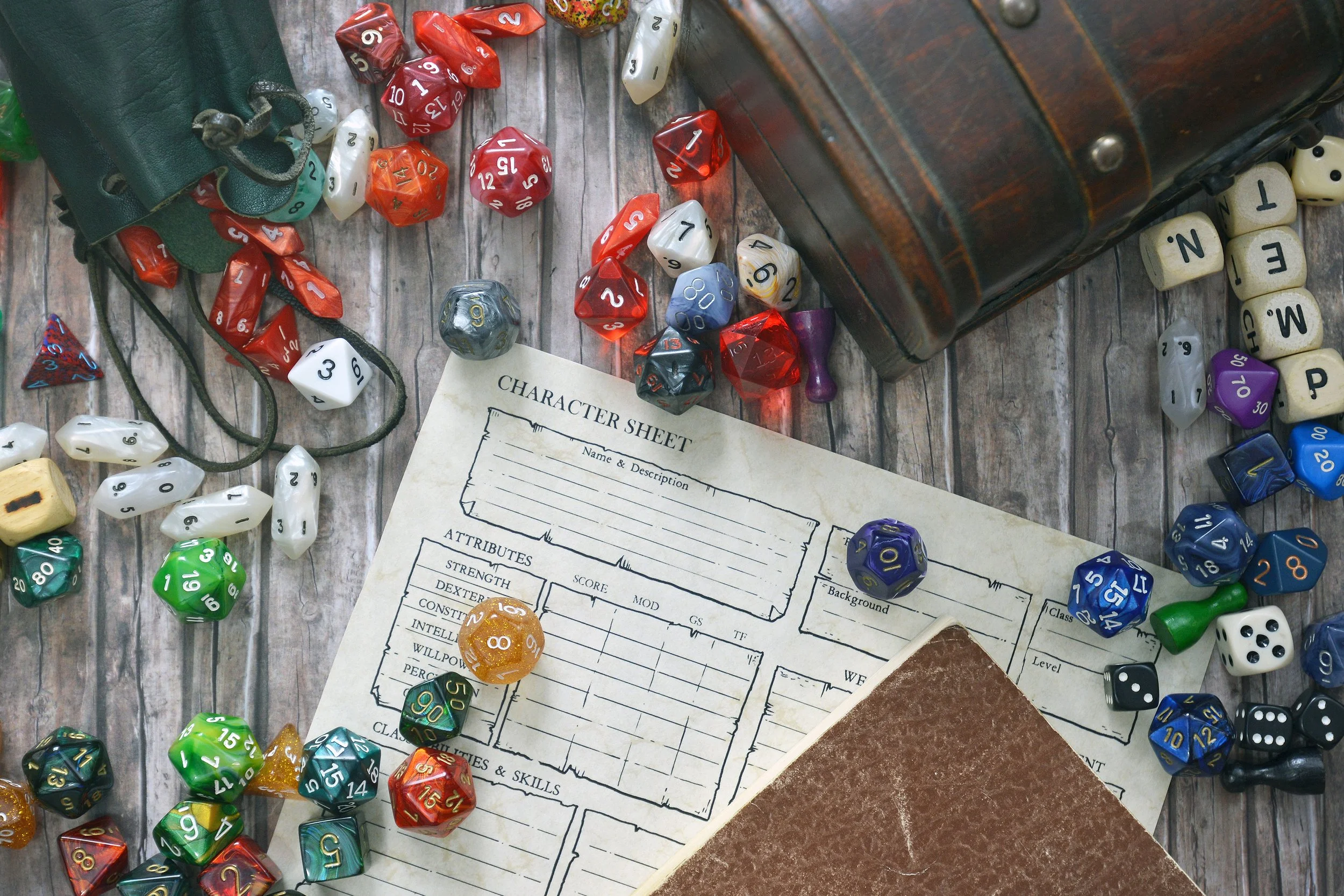
Game designers frequently reference the "Magic Circle"—the invisible boundary where the rules of the normal world stop and the rules of the story begin. Some think of this circle as a shield, protecting the impossible fantasy from the limitations of reality.
Really, the experience is more porous than that. It creates a vivid, low-risk identity simulation where players can "test-drive" new versions of themselves.
Inside this circle, a corporate leader who struggles with empathy might step into the boots of a compassionate Cleric, a character whose entire survival depends on healing and protecting others. Similarly, the student who never speaks in class can suddenly find a new tone as a bold Barbarian or a boisterous Bard.
Because the stakes are fictional, the paralyzing fear of "getting it wrong" evaporates.
When the session ends, the wall between the worlds dissolves. But what you learned doesn’t just stay at the table; it follows you home.
The Neuroscience of Play
The Brain’s Biological “Fast-Pass” to Retention

The human brain is a neuron-firing highway of signals moving from one area to another. It’s built for efficiency, and often filters out predictable or passive input like standard lectures or dense, boring slideshows. TTRPGs take the brain off cruise control. By demanding active participation, these games force the brain to stop merely 'receiving' information and start processing it as a lived experience. When you are the one deciding how to navigate a social conflict, solve a mechanical puzzle, or manage a resource crisis, the brain is forced to engage.
This shift ensures that the skills you're practicing are etched into long-term memory, rather than being filtered out as background noise.
The Highlighter Effect: Amygdala and Emotional Weight
When your group narrowly escapes a trap through a last-second, hair-brained scheme, your brain’s emotional center—the amygdala—flashes a high-importance signal. It tells the hippocampus, "Keep this. This matters."
This is the biological "highlighter effect." While we often say an elephant never forgets, the truth is that their massive brains (and ours) are wired to prioritize emotional weight over raw data. We use this same biological cheat code to move lessons from short-term noise to long-term wisdom.
Embodied Cognition and Sensory Anchors
This process is anchored by embodied cognition. The physical weight of the d20 in your palm, the tactile slide of a miniature across a map, the feel of a wax-sealed letter—these sensory anchors create a multimodal memory. You don't just remember the lesson; you remember the moment your pulse quickened. That makes the skills practiced at the table far easier to retrieve in the real world.
Strategic Team Growth
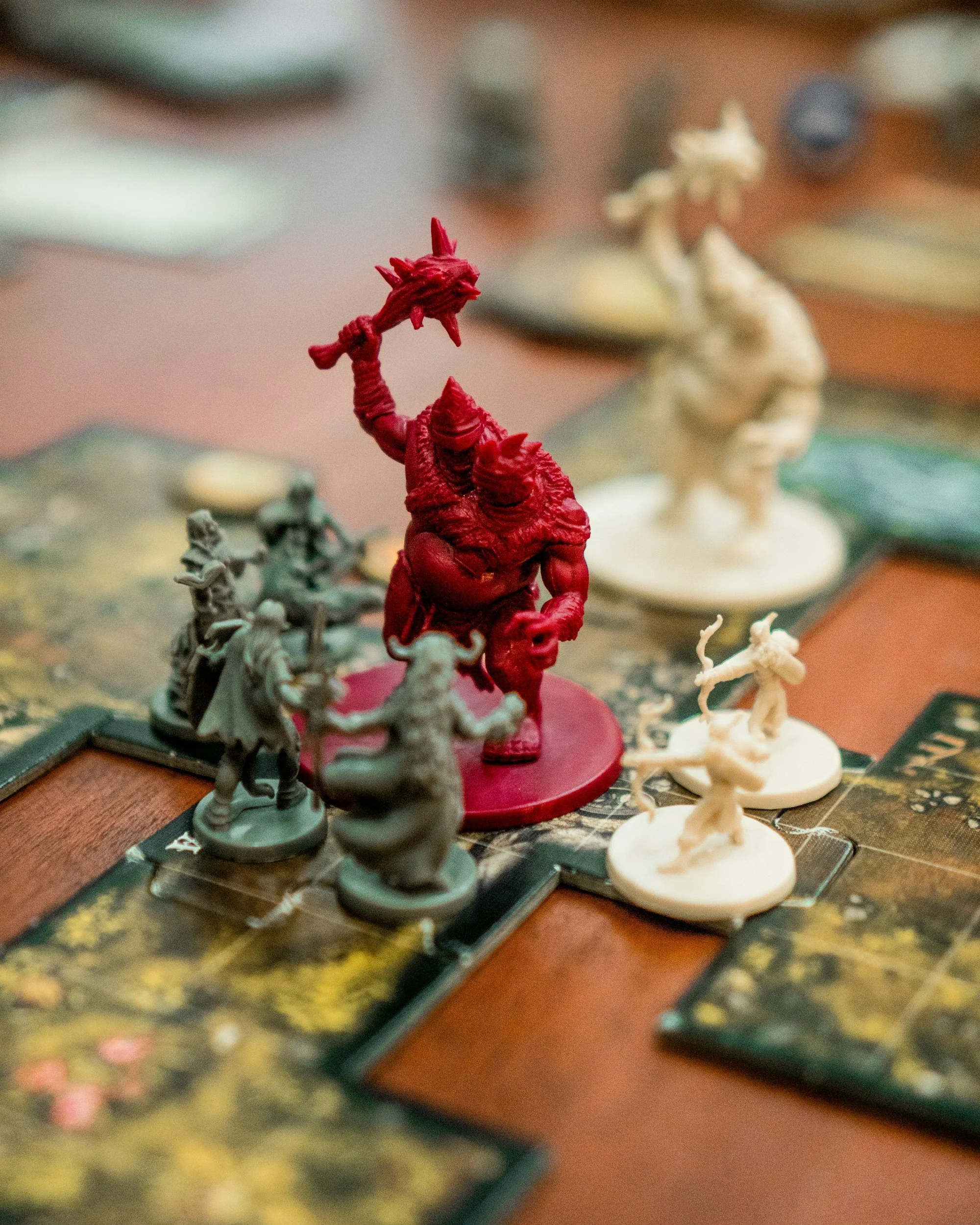
Who says you can’t have fun at work? TTRPGs have the potential to transform a group of coworkers into a high-functioning adventuring party where everyone has a vital role to play.
Gone are the days of passive team-building seminars filled with dry jargon. Instead, games create a collaborative crisis that requires actual, strategic action.
Party Dynamics in the Workplace
Imagine your team trapped in a collapsing cavern. In the office, there is a clear hierarchy, but here, the only thing that matters is the shared goal of getting out alive. Success requires combining the technician’s eye for detail with the manager’s ability to make a hard call under pressure. In this moment, radical listening stops being something you read about in a handbook and becomes a survival requirement. If the group ignores the quietest player who noticed the structural weak point in the ceiling, the whole party fails.
In a world that demands cohesion and leadership simultaneously, every voice becomes a tool. This isn't just about winning a game; it's about building the collective resilience needed to navigate the shifting, unpredictable markets of the real world. This dynamic forces teams to move past polite, shallow agreement and into active, strategic collaboration through these core pillars:
Leadership and Decision-Making: Players gain frequent opportunities to lead the group and make critical, high-stakes decisions when the consequences feel immediate.
Teamwork and Collaboration: Success requires the group to work together toward common goals where every player’s unique contribution is the difference between victory and failure.
Communication and Negotiation: Participants must practice interacting with different perspectives and resolving internal conflicts to move the collective story forward.
Adaptability and Flexibility: The game environment teaches teams to pivot their entire strategy in an instant when a situation turns upside down.
Problem-Solving and Critical Thinking: Teams must analyze complex, "no-win" scenarios to find creative, non-linear ways to survive and thrive.
Beyond the Textbook
TTRPGS as a Catalyst for Active Learning
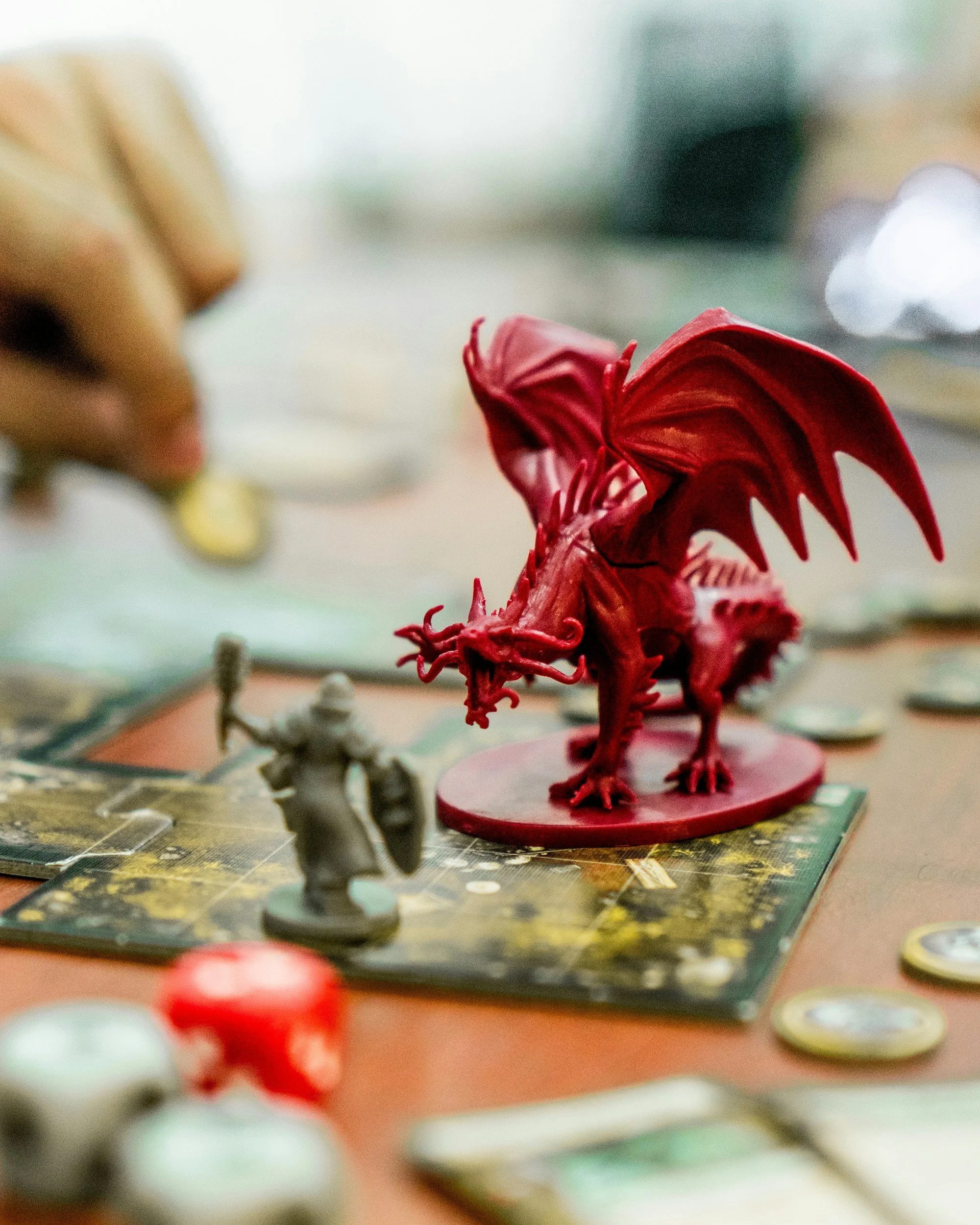
Most classroom experiences follow a predictable loop: read the book, listen to the lecture, take the notes, and pass the test. In this model, students are merely spectators of history. TTRPGs flip the script, turning students into protagonists—each one the main character of their own educational journey.
Instead of just reading about the French Revolution, students become the citizens of Paris. They aren't memorizing dates; they are debating whether to trust a revolutionary leader or how to protect their community’s dwindling bread supply.
This is active learning at its core. By living these stories, students tap into pedagogical and andragogical frameworks that transcend simple memorization. This immersion solidifies retention and boosts assessment scores by replacing "regurgitation" with genuine experience.
While TTRPGs naturally integrate Common Core areas—using math for probability, writing for character backstories, and reading for complex rule sets—their true power lies in how they apply deep learning theories:
Universal Design for Learning (UDL): Games offer a "low floor, high ceiling" space. One student might solve a complex tactical puzzle while another shines through diplomacy, ensuring every learner contributes authentically.
Social-Emotional Learning (SEL): Because games are inherently social, students must practice self-regulation, empathy, and relationship skills in real-time.
Self-Determination Theory (SDT): TTRPGs foster intrinsic motivation by meeting three basic psychological needs. Players gain autonomy over their choices, develop competence by mastering new skills and systems, and foster relatedness through deep, shared narrative goals with their peers.
The 4D Skills & Experiential Learning: Critical thinking, collaboration, communication, and creativity become tools for survival. Students face a challenge, reflect on the outcome, and immediately test new strategies.
🔬 The STEAM Engine: Applied Arts, Science, and Logic 🎨
The "engine" of a TTRPG is often a complex web of logic and probability, making it a powerful bridge for STEM education. These games exercise the same analytical muscles used in coding, engineering, and project management through:
Visual and Narrative Arts: Building a world requires more than numbers; it requires the creation of maps, character illustrations, and detailed backstories. This artistic layer provides the "UI" (user interface) for the game’s logic, turning abstract data into an immersive world.
Probabilistic Thinking: Every die roll is a lesson in statistics. Players learn to weigh risks and understand the "feel" of a bell curve versus a linear distribution.
Systems Analysis: Navigating a rulebook is essentially systems thinking. It requires players to understand how moving one lever in a complex set of rules affects the entire environment.
The Scientific Method: In a STEM-focused game, a mystery is a hypothesis to be tested. To survive, players must observe, theorize, and experiment in a controlled, narrative setting.
These applications offer just a glimpse into how TTRPGs can be mapped to established learning frameworks and academic theories; the true beauty of the medium is that imagination is the only real limit to its potential!

Restorative Narratives
Building Connection and Belonging
Imagine a group gathered around a table, faces lit by the glow of a communal map. They aren't just rolling dice; they are standing before the gates of a forgotten city, tasked with deciding the fate of a captured enemy. One player, who struggles with social anxiety in the real world, finds their voice to argue for mercy. Another, navigating the weight of personal grief, finds a way to channel that loss into a protective spell for their teammates. In this moment, the "game" vanishes. What remains is a restorative narrative—a shared experience where the stakes are fictional, but the growth is undeniably real.
Whether in a clinical setting, a quiet corner of a local library, or a bustling community center, TTRPGs serve as a vital bridge between the safety of the "Magic Circle" and the friction of the real world. For a therapist working with a client or a facilitator leading a community gathering, the table is a tool for restorative growth.
This work is built on a foundation that prioritizes safety and transparency. By intentionally fostering empowerment, choice, and voice, the game allows participants to reclaim their own narratives in a secure, supportive environment through these core pillars:
Externalizing the Conflict: In a session, the "monster" can represent a real-life struggle like anxiety, grief, or social isolation. By facing these challenges through a fictional lens, players gain the distance needed to analyze their struggles without being overwhelmed by them—a core tenet of Narrative Therapy.
The Shared Hearth (Fostering Community): For libraries and community hubs, TTRPGs act as a modern "village square." They provide a structured way to build deep relationships, reducing the epidemic of loneliness by replacing passive consumption with collaborative creation.
A Safe Place to Fail: For individuals navigating social or developmental differences, TTRPGs offer a low-stakes laboratory. Here, a "mistake" is just a plot twist. Players can practice setting boundaries, initiating difficult conversations, and handling confrontation without the fear of real-world fallout.
Emotional Regulation and Resilience: Dealing with a "Natural 1" on a critical roll or watching a teammate face a setback provides a controlled environment to practice emotional pivots. In a supportive group, players learn that a failure isn't the end of the story—it’s just a reason to try a new strategy.
A well-run session leaves a lasting legacy of agency. It proves that the connections we build in the dark of a fictional dungeon—or around a library table—can light up our real-world lives and turn a group of strangers into a resilient, lasting community.
A Hobby Beyond Boundaries
The Lifelong Adventure
Imagine a Saturday afternoon where the television is off and the phones are face-down on the counter. Around the kitchen table, a ten-year-old is carefully explaining a tactical maneuver to their grandmother, while a parent looks on, not as a disciplinarian, but as a teammate. In this space, the generational divide vanishes. They aren’t just relatives sharing a meal; they are a scouting party navigating a treacherous mountain pass. In this moment, the "adult/child" hierarchy is replaced by a shared mission, and the oldest technology we have—the story—becomes the bridge that brings them back together.

This is the ultimate upgrade to the traditional family game night. While board games often focus on "me versus you," TTRPGs focus on "us versus the world." This shift from competition to collaboration changes the entire energy of the home. It replaces the hollow habit of passive scrolling with the vibrant act of active creation.
TTRPGs offer a unique space where entire families can connect as true equals. When a family is focused on a shared goal, the digital distractions of the modern world fade away. You aren't just sitting in the same room; you are inhabiting the same world. It allows for a rare kind of mentorship where wisdom and imagination meet on level ground, fostering a sense of connection that stays at the table long after the dice stop rolling.
This isn't just a game; it’s a return to the most effective social tool in human history: the shared narrative. Whether you are looking for a way to reconnect with your kids or find a new way to engage with your parents, the adventure is lifelong—and it’s only just beginning.
Ready to see the impact in real life?
Check out the services we have to offer.